
Six weeks after Rohan launched his own digital agency website, he was ranking number one on Google for “web design Mildura”. He was sitting above agencies with offices, staff and nice cars, some of which weren’t even on page one for their own keywords. Rohan was still working full time in a factory when it happened.
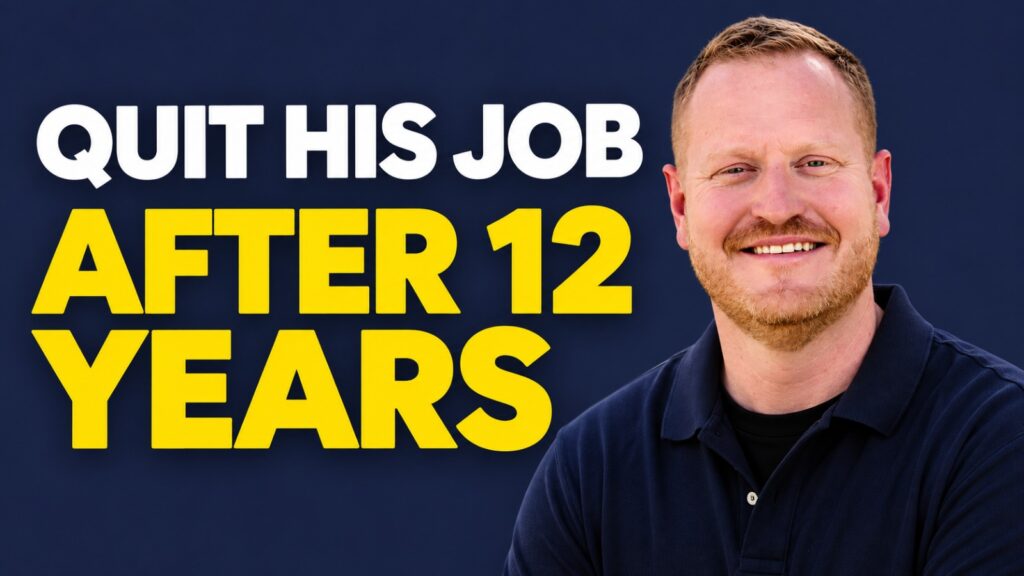
On the 4th of June this year, Rohan walked away from that 12-year job to run his agency full time. He lives in Mildura, a country town in north-west Victoria, and he built the whole thing while working 12 to 14-hour days, running a vending machine side hustle and raising two teenagers. He’s also one of our Champion Cup winners at this year’s High Achiever Awards, and once you hear what he pulled off, you’ll understand why.
I sat down with Rohan on the Digital Investors podcast to unpack exactly how he did it: the gap he spotted in a regional market, the $30,000 website build that gave him the confidence to quit, how he de-risked the leap, and the identity shift that came with it. If you’ve ever wondered whether you could start a digital agency from a country town, this one’s for you. Watch the full interview below to hear Rohan tell the story in his own words.
Six Weeks to Number One in a Country Town
Most people who build their first agency website set modest expectations, and Rohan was no different. When he first looked at the search results for his target keyword, he figured a top three or top four spot would be a solid outcome. He planned to check back in a couple of months.
“I remember looking at the results in Google and thinking, ‘I’d be pretty happy if I got top three, top four out of those ones there.’ And I thought, ‘In a couple of months I’ll come back and check,’ and here I was at number one.”
Rohan
That ranking did two things. First, it gave him a huge confidence boost that the training was working and that he was capable of getting these results himself.
Second, and this is the part a lot of new agency owners overlook, it became his best piece of marketing. When a local business owner searches for a web designer in Mildura, Rohan turns up first. As he put it, “it’s also proof of concept that you know what you’re doing.” His biggest client to date almost certainly found him through that organic ranking.
Who Rohan Was Before He Decided to Start a Digital Agency
Rohan’s day job was in a food manufacturing facility, leading continuous improvement projects across production lines and departments. He reckons that role was a good springboard, because it trained a particular way of thinking.
“It’s probably more about a mindset in that job role than anything, that you just continually try to improve things,” he said. He’s applied that same habit to his own business.
On top of 30 to 40 hours a week at the factory, Rohan had been building a vending machine business since 2020. He started with two machines and now runs 16, putting in 10 to 15 hours a week.
Then he joined our Champions program. Study happened on morning walks with the training in his ears, and the building happened late at night after the kids’ sport and family commitments were done. “To say the days were full is an understatement,” he admitted.
Here’s the first big lesson. Rohan didn’t have spare time or a head start. He made the time. Most people wait for the right moment, and it never arrives. Rohan just got on with it, much like Sarah and Ness, the firefighters who built a $48K digital agency around 24-hour shifts.
Ten Years of Reading, Then One Decision
What I really respect about Rohan is how honest he is about the years he spent not taking action. He decided he wanted financial independence well over a decade ago. He read Money Magazine, worked through Robert Kiyosaki’s books and absorbed everything he could.
But from roughly 25 to 35, it was mostly education without execution.
The vending machines changed that in 2020. He restructured his property position, moving equity from his home into a couple of investment properties, and built a website for the vending business through our original Digital Investors course.
Every year he’d come along to our boot camps, wanting to go further, but never quite pulling the trigger. “This time round it was just the right time,” he said. “And I done it, and haven’t looked back.”
The Skills Behind the Result
I want to be clear about something, because Rohan is very humble. That number one ranking wasn’t luck. It was the product of specific, learnable skills: keyword research, building a properly structured website, on-page SEO and understanding what Google rewards in a local market.
Rohan first learnt those foundations building his vending website through our Digital Investors training, then pushed further with our coaches. These are the same skills that let you build, grow and sell digital assets, and they’re exactly what local businesses will pay serious money for.
If you’d like to learn how to rank websites, build online income streams and develop the capability Rohan used to launch his agency, the best place to start is our Digital Investors Program. It’s where Liz and I teach the fundamentals we’ve used for more than two decades, and it’s where many of our most successful students, including Rohan, first got their hands dirty.
You don’t need a degree or a tech background. Rohan came from a factory floor. What you need is the skill, a gap in the market and the willingness to keep showing up.
How Rohan De-Risked Quitting a 12-Year Job
This is the question I get asked more than any other on the podcast. How do you walk away from a secure wage when you’ve got a mortgage, kids and interest rates that keep climbing? Rohan’s answer is practical, and I think it’s a template a lot of our audience can follow.
His wife, Chrissy, stayed in her full-time role. Rohan was candid that this was a necessity rather than a luxury, with multiple loans in the mix. The vending business also provided steady income. It didn’t fully replace his wage, but it covered a meaningful chunk.
The Safety Net He Never Touched
Rohan also took out a small loan on top of his mortgages purely as a buffer. He hasn’t touched a cent of it. The value wasn’t in spending it; it was in what it did for his head.
“It was more of a mindset thing. If things don’t quite go to plan, then I’ve got this here to save me… It helped me to move forward with confidence.”
Rohan
And there’s another piece of insurance that’s easy to forget. Rohan has 12 years of experience and a strong reputation. If the agency ever stalled, he could go back to work. Knowing the downside is survivable makes it much easier to back yourself on the upside.
The $30,000 Proof of Concept
The trigger for quitting was his second ever paid job: a $30,000 website build for a white-collar professional services firm in the region. Rohan was nervous, as you’d expect. But he walked into that meeting with the confidence he’d built through the program and presented what he could deliver.
“Even though in the back of your head, you’re thinking, ‘I haven’t done this before,’ I’ve got the confidence through the Champions program, in myself, that I’m capable of doing it.”
Rohan
They said yes, and with our coaches supporting him throughout, he delivered an exceptional site.
That one deal changed his maths. “You only need a handful of those and you can comfortably cover a wage in a regional area,” he said.
One of my mentors told me years ago that in business you often just need that first big win as proof of concept. It becomes the springboard for everything else. That’s exactly what happened here. Rohan went on to do $40,000 in his first year whilst still working full time.
One honest note on big builds: that project took six months from start to finish, though nowhere near six months of actual work. Rohan expected two to three months.
But when you’re dealing with internal systems, staff changes and waiting on content, timelines stretch. Factor that in when you’re pricing and planning cash flow.
The Lead Generation System He Ran While Working Full Time
So how do you find clients when you’re stuck in a factory all day and can’t get to a 7:30am networking breakfast? Normally we encourage first-year agency owners to join a local business networking group.
Rohan couldn’t. So he built a system that worked around his life.
Building a Database of 1,000+ Local Businesses
Rohan used a Google Maps scraper to pull every business category in the Sunraysia region. The tool searches terms like “plumber Mildura” and dumps the results into a spreadsheet.
He ended up with a pile of individual spreadsheets, uploaded them all into Claude and asked it to merge them into one master file with tracking columns. The result was a database of over 1,000 local businesses, segmented into verticals like tradies, mechanics, vets, hospitality, lawyers and accountants.
Before he calls anyone, he spends about five minutes reviewing their Google Business Profile and website. What he’s consistently found is that Mildura is underserved. Plenty of established businesses simply don’t have the calibre of site our champions are trained to build.
Outsourcing the Outreach
Rohan started emailing businesses himself but quickly realised it would eat all his time. So he set up a secondary email account and hired an outsourcer on Upwork at around $8 an hour for roughly five hours a week. They sent about 50 emails a week, using a cold email Rohan wrote himself.
The key detail is the follow-up. Each business received a sequence of three emails, and Rohan found the second and third emails did most of the heavy lifting. Some landed in spam; one client only found Rohan because he diligently checks his spam folder.
From this outreach, Rohan sat in front of 10 to 15 business owners and converted five or six into paying jobs.
A word of caution here. If you run cold email outreach, make sure you understand the spam laws in your country and stay compliant. Do your research, ask an AI tool to explain the rules, and get proper advice if you’re unsure. It’s what worked for Rohan over 12 months, not the only way to do it.
Why Being Local Is the Secret Weapon
Every single one of Rohan’s emails opened with the same line: “Hi, I’m Rohan. I’m a local business owner here in Mildura.” That one sentence did a lot of work. Regional business owners are wary of faceless city agencies, and they love dealing with someone they can actually meet.
“You’re local and you know what you’re doing,” Rohan said. “Big city agency level sites, and I can just meet you at the coffee shop.” In a town where you’re never more than 10 to 20 minutes from anywhere, face-to-face is easy, and most clients prefer it.
We’ve seen the same pattern with Reese, an ex-policeman in Gympie who gets nearly all his leads from his own number one ranking. Our champions in regional America are reporting exactly the same thing.
Rohan shared a moment that stuck with me. He was having a cup of tea with a semi-retired local artist and her husband, talking about rebuilding the website they’d had a go at themselves.
“Here I am having a cup of tea with a local artist, and this is my job. How cool is that?”
Rohan
That’s a pinch-yourself moment, and it’s one a lot of people never get in a 9 to 5.
The Entrepreneur Mindset Shift Nobody Warns You About
This is the part of the journey people don’t talk about enough. Rohan spent 12 years as a PAYG employee and decades seeing himself a certain way.
Going full time on your own business means you’re now driving the bus, and that requires a genuine change in identity. Rohan’s take on developing an entrepreneur mindset is one of the most grounded I’ve heard.
“Mindset’s like an ambiguous word. It’s just proving to yourself that you’re capable of what you are. We all go into it with self-doubt, and if you keep persevering, keep believing in yourself, you will come out the other side, and you will be more capable and confident than you ever were before.”
Rohan
Riding Out the Lulls
It’s not all roses. Rohan has had weeks where a meeting doesn’t convert, nobody replies and he starts second-guessing everything. Then a lead from six months ago calls back saying they’re ready.
Just before our interview, he’d come out of a quiet few weeks and landed five new website builds at once.
His philosophy is simple. Keep turning up. “You might meet 10 people and then the 11th one will be the one that says yes,” he said.
Since leaving his job, he’s also joined the local networking group, which has sharpened his pitch and connected him with like-minded business owners.
Building Structure After the 9 to 5
When Rohan first went full time, he let the days just happen. I see this a lot with people leaving structured employment, and it rarely works.
So he brought in a 90-day routine: up, shower, coffee, at least a stretch or workout in his home gym, then a focused 90-minute block on the business. That block regularly turns into four or five hours. Prioritising his physical health first has made the mental side far easier.
How AI and a Lean Team Keep It Running
Rohan’s become a genuine power user of AI. Recently he asked Claude to review twelve months of their chat history and build a checklist reflecting how he actually runs website builds now.
It then connected directly to ClickUp and uploaded the whole thing as a phased project template, with sub-checklists for each team member. He even uses it to troubleshoot electrical faults in his vending machines.
His team is lean and entirely sourced from Upwork in the Philippines. One person handles social media and outreach, one handles builds, one implements SEO, and a highly technical specialist looks after maintenance and security.
Rohan does all the research and strategy himself, which keeps quality high while freeing him up to sell and serve clients.
What You Can Do This Week
I asked Rohan what he’d tell someone in a regional town, stuck in a job they don’t love, about getting started this week. His answer was short.
“Believe in yourself and start. Starting is the biggest hurdle.”
Rohan
He reminded me that he spent a decade reading before acting, and that it’s easy to look at successful people and assume they had some secret advantage. “They just turned up,” he said. “You don’t see all the moments that they have at home thinking, ‘Oh, I’m not sure if I’m capable of this.'”
If you’re ready to take that first step, learning the core skills is the logical place to begin. Our Digital Investors Program gives you the foundations Rohan built on, from creating and ranking websites to understanding what makes a digital asset valuable.
The Big Takeaway
What I love about Rohan’s story is that he didn’t need a big city, a degree or a perfect plan. He needed a skill, a gap in the market and the willingness to keep turning up.
He found the gap right on his doorstep: established regional businesses with underperforming websites and no local expert to help them.
Liz and I grew up in a country town too, and we started our own online journey with no digital skills at all, so this one’s close to my heart. If you live in a regional area, take a good look at the businesses around you. Check their websites. Search for their services on Google.
And ask yourself whether you could be the person who helps them win online. Rohan did, and 12 months later he’s working for himself, sitting at number one, and having cups of tea with clients as his actual job.


